
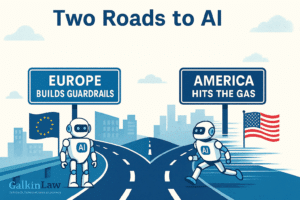
The world’s two largest economies, the European Union and the United States, are taking starkly different paths to regulate artificial intelligence, each with its own strategic priorities and potential trade-offs. The EU has adopted a proactive, risk-based approach with the world’s first comprehensive AI law, prioritizing fundamental rights and user protection. This strategy, while aiming to build trust and a level playing field, risks stifling innovation through pre-market compliance requirements and severe penalties. In contrast, the US is pursuing a deregulatory, innovation-first strategy, explicitly rejecting a comprehensive national law to win the global AI race. This market-driven approach prioritizes speed and competitiveness, with a focus on national security and infrastructure, but may leave consumer protection and other societal concerns as a secondary consideration.
𝗧𝗵𝗲 𝗘𝗨’𝘀 𝗥𝗶𝘀𝗸-𝗕𝗮𝘀𝗲𝗱, 𝗥𝗲𝗴𝘂𝗹𝗮𝘁𝗼𝗿𝘆-𝗖𝗲𝗿𝘁𝗮𝗶𝗻𝘁𝘆 𝗠𝗼𝗱𝗲𝗹
𝗥𝗶𝘀𝗸-𝗕𝗮𝘀𝗲𝗱 𝗖𝗹𝗮𝘀𝘀𝗶𝗳𝗶𝗰𝗮𝘁𝗶𝗼𝗻
AI systems are classified into unacceptable risk, high risk, limited risk, and minimal risk, with corresponding obligations for each category. High-risk systems (like those used in healthcare, employment, or law enforcement) face strict testing, transparency, and human oversight requirements.
𝗣𝗿𝗲-𝗠𝗮𝗿𝗸𝗲𝘁 𝗖𝗼𝗺𝗽𝗹𝗶𝗮𝗻𝗰𝗲
Before deployment, many AI systems must undergo conformity assessments, technical documentation reviews, and adherence to EU standards.
𝗘𝗻𝗳𝗼𝗿𝗰𝗲𝗺𝗲𝗻𝘁 𝗮𝗻𝗱 𝗣𝗲𝗻𝗮𝗹𝘁𝗶𝗲𝘀
Violations can lead to fines of up to €35 million or 7% of global turnover, creating a strong incentive for compliance.
Goal: Protect fundamental rights, safety, and trust in AI while ensuring a level playing field across the EU market.
This approach mirrors Europe’s overall precautionary regulatory culture (think GDPR for data privacy)—prioritizing risk management and user protection first, innovation second.
𝗧𝗵𝗲 𝗨𝗦 𝗗𝗲𝗿𝗲𝗴𝘂𝗹𝗮𝘁𝗼𝗿𝘆, 𝗜𝗻𝗻𝗼𝘃𝗮𝘁𝗶𝗼𝗻-𝗙𝗶𝗿𝘀𝘁 𝗦𝘁𝗿𝗮𝘁𝗲𝗴𝘆
𝗠𝗶𝗻𝗶𝗺𝗮𝗹 𝗙𝗲𝗱𝗲𝗿𝗮𝗹 𝗥𝗲𝗱 𝗧𝗮𝗽𝗲
The plan explicitly rejects “smothering AI in bureaucracy,” with no comprehensive national AI law on the horizon.
𝗦𝘁𝗮𝘁𝗲 𝗔𝘂𝘁𝗼𝗻𝗼𝗺𝘆
The Federal government won’t block states from enacting AI laws but will avoid funding states with “burdensome AI regulations.”
𝗙𝗼𝗰𝘂𝘀 𝗼𝗻 𝗡𝗮𝘁𝗶𝗼𝗻𝗮𝗹 𝗦𝗲𝗰𝘂𝗿𝗶𝘁𝘆
AI policy is intertwined with protecting American talent, IP, and infrastructure from foreign adversaries.
𝗜𝗻𝗳𝗿𝗮𝘀𝘁𝗿𝘂𝗰𝘁𝘂𝗿𝗲 𝗮𝗻𝗱 𝗚𝗹𝗼𝗯𝗮𝗹 𝗟𝗲𝗮𝗱𝗲𝗿𝘀𝗵𝗶𝗽
Heavy emphasis on data center buildout, export of American AI technology, and maintaining free speech in AI models.
Goal: Win the global AI race through speed, innovation, and limited regulation, positioning the US as the dominant exporter of AI solutions.
This is a market-driven approach, prioritizing competitiveness and innovation over preemptive regulation, with security considerations taking precedence over consumer protection.
𝗙𝗶𝗻𝗮𝗹 𝗧𝗵𝗼𝘂𝗴𝗵𝘁𝘀
The EU’s precautionary, risk-based model prioritizes user protection and trust over innovation, aiming to protect fundamental rights and safety in AI. In contrast, the US’s market-driven, deregulatory approach seeks to win the global AI race through speed and limited regulation, prioritizing competitiveness over preemptive regulation. The success of these two divergent strategies will determine whether trust or unbridled innovation ultimately shapes the future of the global AI ecosystem.